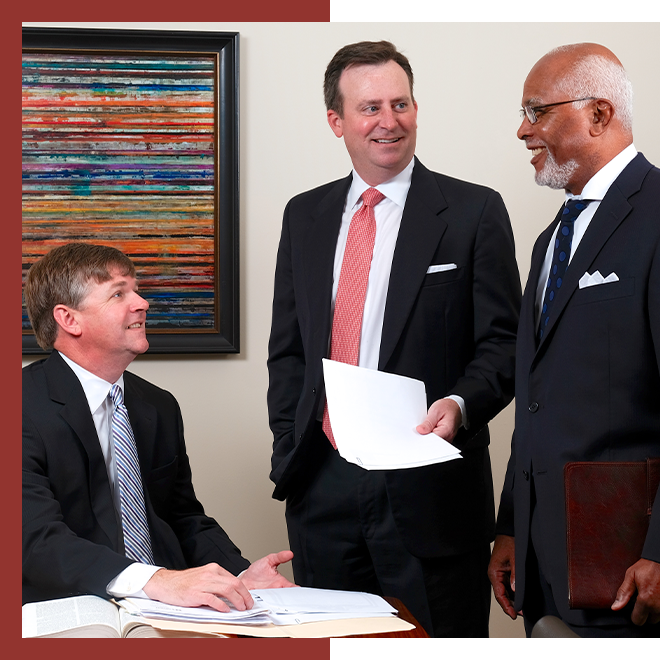
Former Prosecutors. Board-Certified Defense. 150+ Years of Combined Experience.
Criminal offenses fall into two categories: misdemeanors and felonies. Felonies are the more serious of the two, carrying heavier penalties and longer-lasting consequences. The felony defense attorneys at Grace, Tisdale & Clifton P.A. represent defendants facing felony charges in both state and federal courts, drawing on 150+ years of combined legal experience across our team.
North Carolina organizes felony offenses into 10 classes, from Class A (the most serious) through Class I (the least serious), with Class B divided into B1 and B2. Class A is reserved for first-degree murder. Class B1 and B2 cover serious violent and sexual offenses. Classes C through I address a progressively broader range of conduct with correspondingly lighter sentencing ranges.
Sentences are determined using the state’s structured sentencing grid, which cross-references the felony class against the defendant’s Prior Record Level (Level I through Level VI). The grid produces three possible sentence ranges: mitigated, presumptive, and aggravated. It also determines the disposition type: active punishment (prison), intermediate punishment (supervised probation with conditions), or community punishment (probation without incarceration). The actual sentence depends on the offense class, the facts of the case, and the defendant’s prior criminal history.
Types of Felony Offenses We Defend
Even a Class I felony, the least serious category, can follow you for life. A conviction on your criminal record can close doors to employment, education, and housing. In some cases, an expungement may help clear your record. We represent clients at every stage: from indictment through trial and, when necessary, on appeal.
Why Our Prosecutorial Background Matters for Your Defense
Our felony defense attorneys have represented thousands of clients charged with serious crimes. Most of our attorneys are former prosecutors who understand firsthand how the state builds a case. That background gives us an ability to identify weaknesses in the prosecution’s theory, anticipate its tactics, and develop a defense strategy built around what the evidence actually shows. We investigate every case thoroughly before we walk into court.
Michael A. Grace Michael A. Grace spent over 30 years in NC state and federal courts trying thousands of cases, including serious felonies, as a lifelong Winston-Salem resident and former prosecutor.
D. Kenneth Tisdale Jr. D. Kenneth Tisdale Jr. served as an Assistant District Attorney in Winston-Salem from 1997 to 2002, prosecuting felony trials including capital murder in Forsyth County Superior Court.
Christopher R. Clifton Christopher R. Clifton is a NC Board Certified Specialist in State and Federal Criminal Law, a distinction held by fewer than 3% of NC attorneys, and concentrates on serious felonies, white collar crimes, and federal defense.
If you’ve been charged with a felony, contact us online or call (336) 515-6552 to speak with one of our attorneys about your situation.
North Carolina Felony Classes & Sentence Ranges
Where a charge falls on North Carolina’s structured sentencing grid matters from the first day of representation. The grid cross-references felony class with Prior Record Level to produce a sentencing range, and the actual sentence can shift significantly based on aggravating and mitigating factors. The ranges below reflect presumptive dispositions for illustrative purposes only; actual sentences depend on prior record level and the specific facts of each case.
Felony Classes A Through I
Class A: First-degree murder only. The only available sentences are death or life without parole. Class A offenses are not sentenced under the standard grid.
Class B1: Offenses such as second-degree murder and first-degree rape. Maximum sentence is life without parole.
Class B2: Serious violent offenses below B1 severity, with maximum sentences potentially spanning decades.
Class C: Examples include second-degree forcible rape, assault with a deadly weapon with intent to kill inflicting serious injury, first-degree kidnapping, and embezzlement of $100,000 or more. Presumptive ranges may reach approximately 5 to 12 years, with maximums up to 19 years depending on prior record.
Class D: Examples include voluntary manslaughter, first-degree burglary, first-degree arson, and armed robbery. Presumptive ranges may reach approximately 4 to 10 years, with maximums up to 17 years.
Class E: Presumptive ranges of approximately 2 to 4 years, with maximums up to 7 years.
Class F & G: Mid-range felonies where presumptive ranges for first-time offenders may begin at less than 2 years; intermediate or community punishment dispositions are possible.
Class H: Examples include assault by strangulation and possession of stolen goods. Standard sentencing range may range from 5 to 20 months with a maximum of 3 years, depending on prior record level and other factors.
Class I: The least serious felony level. Examples include breaking into a vehicle and possession of a firearm on school grounds. Punishment may range from 4 to 10 months with a maximum of 2 years, depending on prior record level and other factors.
How Prior Record Level Affects Your Sentence
Prior Record Level is calculated by assigning point values to each prior conviction. Defendants with no prior record (Level I) may qualify for community or intermediate punishment even on mid-level felonies. Level VI defendants generally face active prison time for most felony convictions. Drug trafficking offenses carry mandatory minimum sentences and fines set by statute, limiting judicial discretion regardless of felony class. North Carolina also has no statute of limitations for felonies, meaning charges can be filed at any time after the alleged offense.
Collateral Consequences of a Felony Conviction in North Carolina
A felony conviction carries consequences that extend well beyond the sentence. These collateral consequences can touch nearly every area of daily life, and some begin affecting defendants before a conviction is even final. That’s one of the most important reasons to get a defense attorney involved as early as possible.
Civil Rights & Firearms
A felony conviction in North Carolina results in the loss of the right to vote, hold public office, and serve on a jury. Under G.S. 13-1, these rights are generally restored automatically upon completion of the full sentence, including any probation or parole period. Firearm rights are not automatically restored upon completion of a sentence. Under both N.C.G.S. 14-415.1 and federal law, any felony conviction bars possession, purchase, or ownership of firearms. Restoration may potentially be available through a pardon or, for a single nonviolent felony meeting specific statutory criteria, through a court petition under G.S. 14-415.4.
Employment, Licensing, & Housing
Employment background checks expose felony records, creating significant barriers in many fields. A conviction can also prevent someone from obtaining a professional license and may result in suspension or revocation of licenses already held in regulated trades and professions. Access to federal assistance programs, including housing assistance, SNAP benefits, and certain educational funding, can be affected by a felony record as well.
Expungement & Certificates of Relief
North Carolina offers a Certificate of Relief under G.S. 15A-173.2 for certain Class H and I felony convictions. A certificate can remove specific collateral consequences, such as employment and licensing barriers, though it doesn’t erase the conviction or restore firearm rights. Expungement of a nonviolent felony may be available after a waiting period for eligible first-time offenders, removing the conviction from public records entirely. Not all felonies qualify, and the most serious offenses are excluded. Our felony defense attorneys in Winston-Salem can advise on which relief options may apply to your situation.